Book Your Safari
Complete the form below to reserve your safari. Our team will confirm your booking and offer further details.
Complete the form below to reserve your safari. Our team will confirm your booking and offer further details.
Share your travel dreams, and we'll craft a personalised itinerary for you!
The quote provided is an estimate based on the information you supply. Final pricing may vary based on availability, changes in travel dates, and additional details.
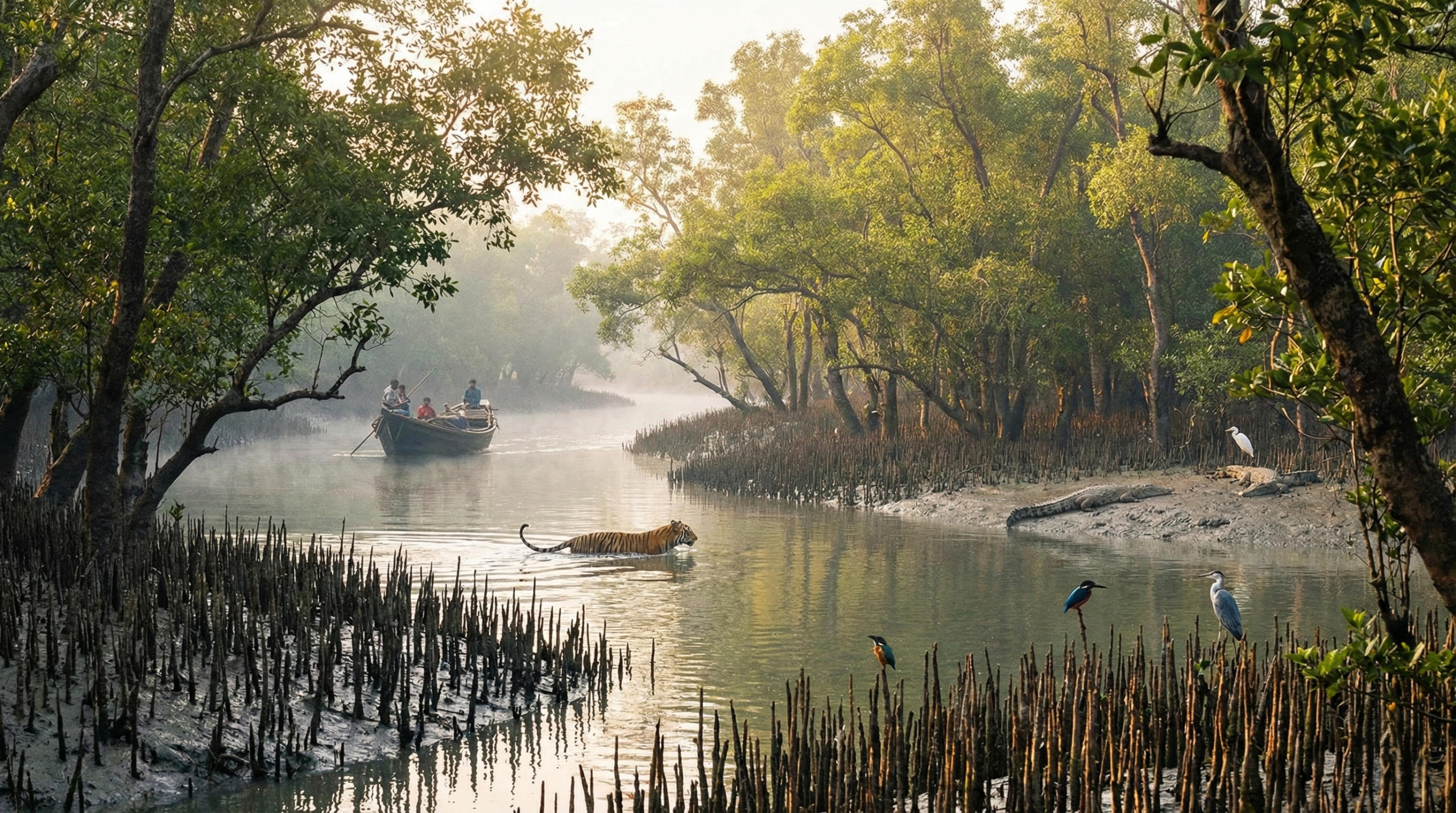
The Sundarbans is one of those places that stays with you long after you leave. It rises out of the meeting point of land and sea in the Bay of Bengal, stitched together by tidal rivers, saltwater canals, and tangled mangrove forests. What you get here is not just a forest but a living, breathing ecosystem shaped by tides, storms, migrating birds, and one of the planet’s most iconic predators, the Royal Bengal Tiger.
If you are planning a Sundarbans safari in 2026, you are already ahead of the curve. More travelers are looking for raw, nature-driven experiences, and this region offers exactly that. This guide walks you through every detail you need to make your trip smooth, safe, and memorable. Think of it as a practical handbook that covers routes, wildlife, boat safaris, timings, permits, best zones, sustainable travel insights, and everything in between.
And if you are looking for curated wildlife journeys beyond the Sundarbans, AsianSafaris also runs immersive experiences across India, Nepal, Bhutan, and Sri Lanka. You can explore samples of these experiences right on the website at AsianSafaris.
Let’s break down your complete Sundarbans Safari Guide for 2026.
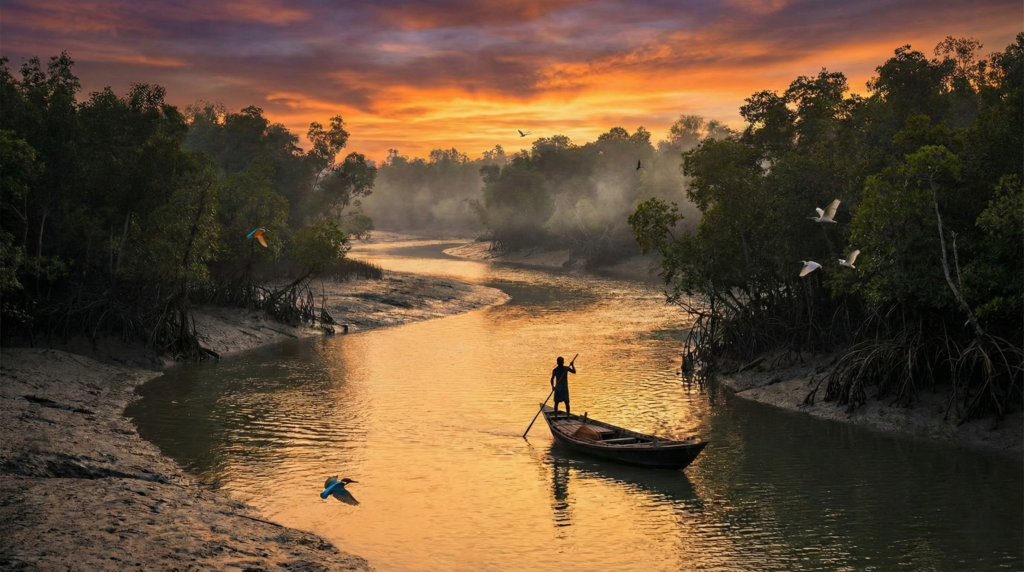
The Sundarbans covers nearly ten thousand square kilometers across India and Bangladesh. The Indian side alone protects vast mangrove stretches that have adapted to survive salty tides and shifting mudflats. The root systems are a maze that shelters crustaceans, reptiles, and fish nurseries.
Recognized for both biodiversity and ecological significance, the region’s UNESCO listing means tighter conservation guidelines. As travelers, you get to see an ecosystem that is genuinely wild. Read more about its global status on the UNESCO World Heritage Centre.
The Royal Bengal Tiger is the headline attraction. Tigers here know how to swim and have adapted to life among mangroves rather than open forests. Sightings can be rare, but when they happen, they feel surreal.
Saltwater crocodiles, fishing cats, otters, mudskippers, seven species of kingfishers, monitor lizards, and hundreds of birds call the Sundarbans home. Dolphins appear in quieter channels. The area pulses with wildlife even when the big cat stays hidden.
Most travelers start from Kolkata because it is the closest major city with easy transfers to the forest.
Road Transfer to Godkhali:
The gateway to the Sundarbans is Godkhali, about three and a half hours from Kolkata by road. From Godkhali, you switch to a motorboat.
You can take a train from Kolkata to Canning, then ride to Godkhali by car. This route works well if you prefer mixing public transport with local transfers.
For international travelers flying into Kolkata, the domestic transfers are simple. Private operators and wildlife tour companies like AsianSafaris arrange direct pickup from the airport if booked in advance.
Picking the right season changes everything. Here is how the year breaks down.
This is the best time for a Sundarbans safari. Temperatures stay comfortable, visibility improves, and the forest feels alive with migrant birds. Boat rides are pleasant, and since this is peak tiger activity season, many travelers plan trips around these months.
Hotter days push animals toward water channels. Sightings of crocodiles, otters, and birds increase. This period works well if you prefer fewer tourists.
Travel during the monsoon is not recommended. The area floods easily, tidal currents turn unpredictable, and many tourism operations remain closed. Plan well ahead to avoid this window.
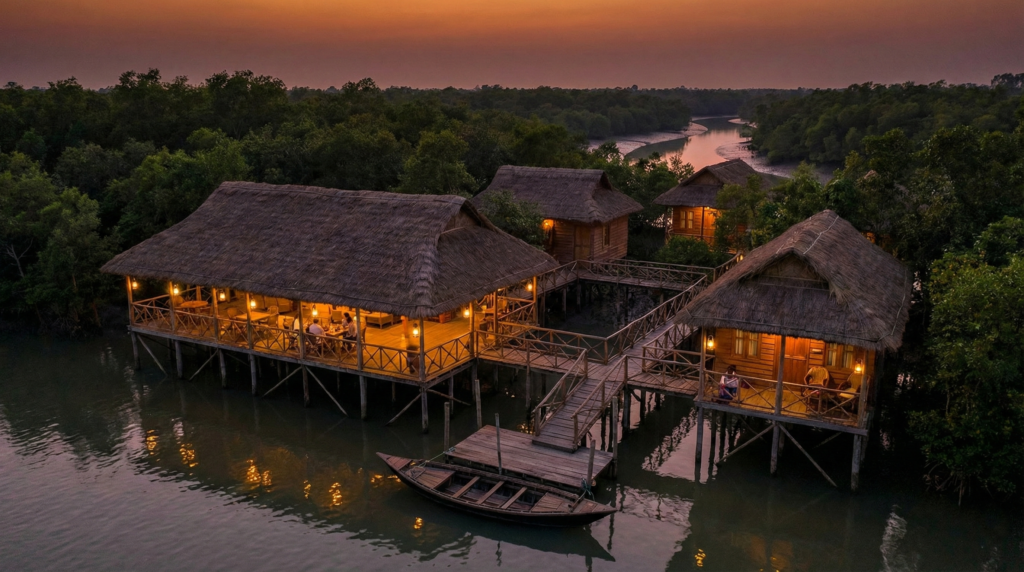
You will not find large hotels or luxury chains here, which is part of the region’s charm. Accommodations tend to fall into two reliable groups.
These are built with sustainability in mind. Expect simple yet comfortable rooms, local cuisine, and guided excursions. Look for properties that follow government-approved eco-practices.
Some travelers prefer multi-day cruises, which allow you to sleep on the water and cover more creeks without constant transfers. These come with private cabins and onboard naturalists.
When booking, check if the operator uses licensed guides and eco-friendly boats. You can find examples of responsible wildlife itineraries in other destinations on the AsianSafaris India Wildlife page.
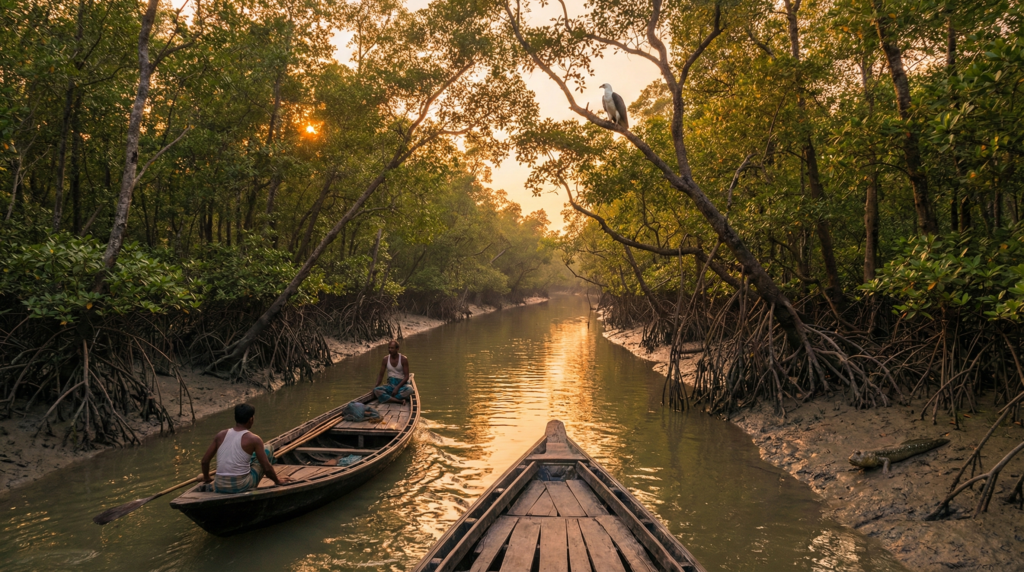
Safari in the Sundarbans is different from what many travelers expect. You do not drive into the forest. Instead, everything happens on the water.
This is the core of the experience. Boats glide through narrow creeks, open rivers, and mangrove tunnels. You stop at watchtowers and protected zones along the way. These boats have shaded decks, seating areas, and safety gear.
If you want a deeper experience, consider overnight or three day safaris. These let you explore remote channels and observe wildlife at dawn and dusk, which are prime movement hours.
Popular points include Sajnekhali, Dobanki, and Sudhanyakhali. These towers give you a stable view of the surrounding forest and water bodies. Many tiger sightings occur near these areas, especially in the early morning.
This is the hub of tourism. It houses the main forest office, interpretation center, and a watchtower. Crocodiles and water birds are common here.
A favorite among photographers. The watchtower overlooks a grassy clearing where deer, boar, and sometimes tigers appear.
Known for its canopy walk, this zone is perfect for spotting birds and macaques.
A restricted area with ruins linked to regional folklore. Only a few boats are allowed each day.
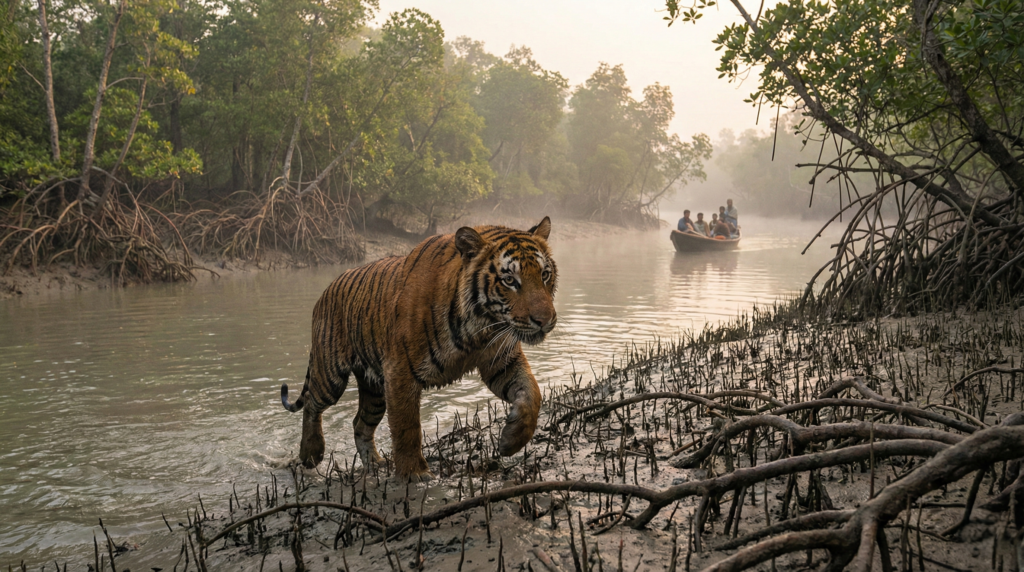
The star attraction. Tigers here move differently, swim often, and stay close to the channels. Keep expectations realistic, but always keep cameras ready.
These massive reptiles are often seen basking or floating silently along river edges.
Seven kingfisher species, herons, black capped night herons, ospreys, grey headed fish eagles, and migrant species during winter.
You may spot them near quieter creeks if your guide knows where to look.
Monitor lizards, snakes, and mudskippers add to the drama of the mangrove landscape.
All visitors need forest entry permits issued either at Sajnekhali or through licensed tour operators. These licenses include boat permissions and guide fees.
A government certified guide travels with every boat. They help interpret wildlife behavior, maintain safety, and ensure you stay within approved routes.
The forest is extremely sensitive. Here is what to keep in mind:
You can learn more about responsible travel standards recommended globally on WWF’s conservation guidelines.
Here is a practical list that keeps things simple.
Light cotton clothes, a hat, sunglasses, waterproof sandals, and a light jacket for winter mornings.
Binoculars, insect repellent, sunscreen, reusable water bottle, dry bag for electronics, and motion sickness tablets if you feel uneasy on boats.
A zoom lens, extra batteries, and memory cards. Boats offer stable platforms, but a beanbag helps if you are shooting long focal lengths.
You start at sunrise because this is when the forest is most active. The boat moves through narrow channels first, which boosts your chances of spotting movement near the banks.
You stop at one or two watchtowers. Many birds come out at this time, and you may see crocodiles basking.
As tides rise, the boat heads toward deeper channels. This is often when dolphins or raptors appear.
You return to your lodge or settle into your houseboat for sunset views.
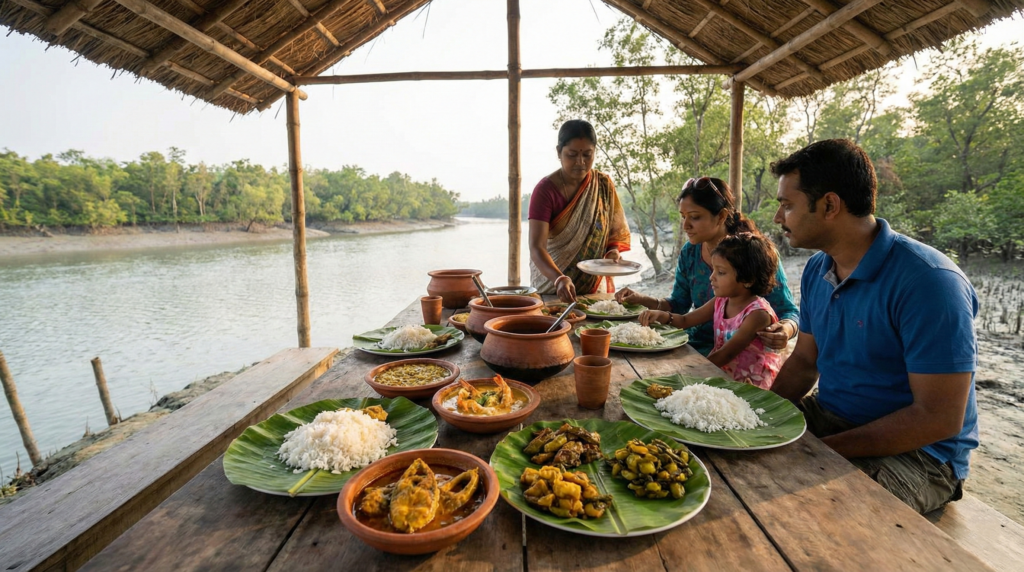
The Sundarbans is not just about the forest. It is also home to resilient communities that depend on fishing, honey collection, and farming.
Fresh river fish, prawns, rice dishes, and vegetable preparations take center stage. Lodges follow simple, home style cooking.
Some lodges arrange folk performances by local artists. These performances often narrate stories of Bonbibi, the forest guardian goddess.
Boats plan routes according to tide timings. Sudden storms or choppy waters can delay trips. Always keep your schedule flexible.
The region gets humid. Drink water consistently during the day.
Carry repellents and wear long sleeves during evenings.
Choose operators whose boats carry life jackets, first aid kits, and communication equipment.
Here’s the thing. The Sundarbans is one of the most fragile ecosystems in Asia. Even small disruptions ripple across the forest and waterways.
The Sundarbans acts as a natural shield against cyclones and coastal erosion. Protecting it is not only about wildlife but also about preserving the livelihoods of millions.
Planning a trip to such an intricate ecosystem becomes easier with experienced wildlife operators. AsianSafaris helps travelers craft wildlife journeys that are informed by local insights and conservation principles. If you want your 2026 Sundarbans safari to run smoothly, booking with specialists saves time and avoids logistical hassles.
You can browse ideas or combine a Sundarbans trip with national parks in India, Nepal, Sri Lanka, or Bhutan by visiting the AsianSafaris homepage.
A Sundarbans safari is not a typical wildlife outing. It is slow, atmospheric, and deeply tied to nature’s rhythms. When you sit on a boat at sunrise, drifting past mangrove roots that look like sculptures, you understand why this place is unlike anywhere else. Planning your 2026 trip with the right guidance lets you enjoy the forest in the way it deserves.
If the thrill of tracking wildlife in untouched landscapes excites you, the Sundarbans belongs at the top of your list. Explore responsibly, support conservation, and let the forest show you its secrets in its own time.