Book Your Safari
Complete the form below to reserve your safari. Our team will confirm your booking and offer further details.
Complete the form below to reserve your safari. Our team will confirm your booking and offer further details.
Share your travel dreams, and we'll craft a personalised itinerary for you!
The quote provided is an estimate based on the information you supply. Final pricing may vary based on availability, changes in travel dates, and additional details.
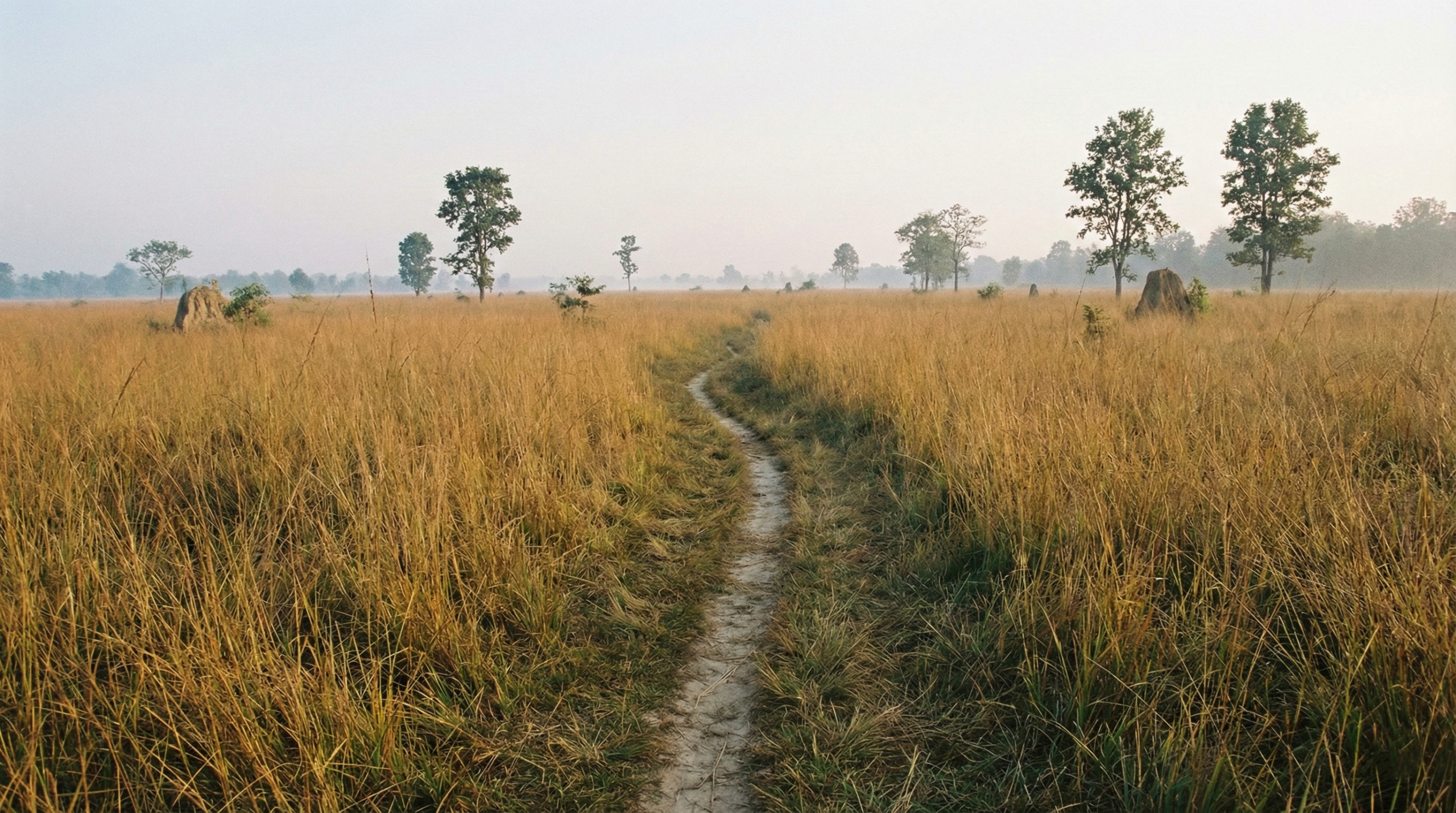
The Terai is where the Himalayas soften into grasslands, river forests, and floodplains. It is also where wildlife still shapes the rhythm of daily life. Walking safaris in the Terai are not about speed, comfort, or spectacle. They are about attention. Each step brings you closer to tracks in the sand, alarm calls in the trees, and the quiet logic of a living ecosystem.
Unlike jeep safaris, walking safaris place you on the same ground as the wildlife. You move slowly, read the landscape, and learn to observe without disturbing. This approach makes walking safaris in the Terai one of the most raw and responsible ways to experience South Asia’s lowland wilderness.
For travelers seeking depth rather than checklists, this is wildlife travel at its most honest.
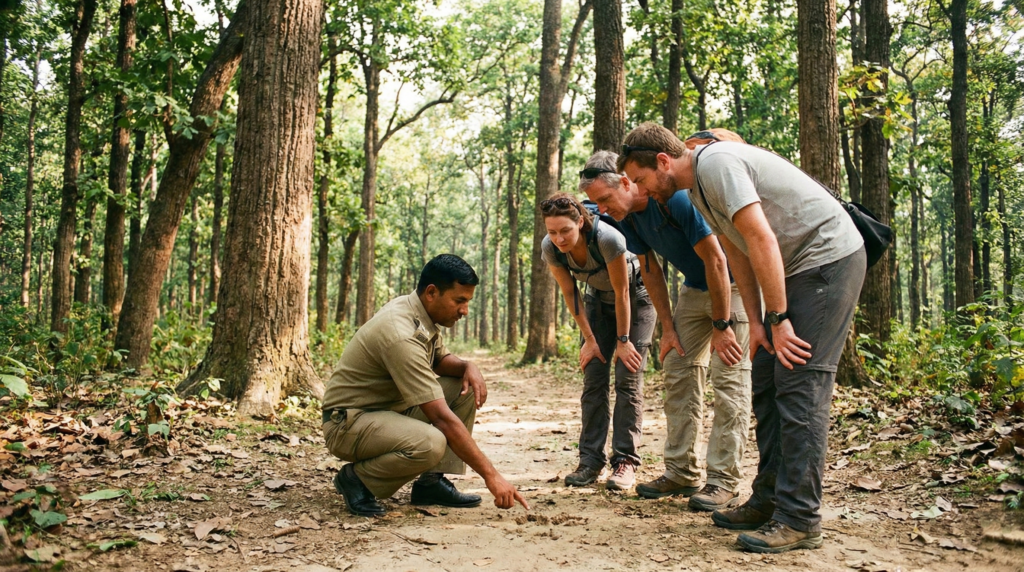
The Terai is a broad lowland belt stretching across southern Nepal and northern India, and linking into Bhutan’s foothills. It is defined by fertile floodplains, tall grasslands, sal forests, and braided rivers fed by Himalayan snowmelt.
This mosaic of habitats supports some of South Asia’s highest biodiversity. It also forms a critical wildlife corridor that connects protected areas across borders.
The Terai’s flat terrain and open grasslands make it suitable for controlled walking experiences. Visibility is often better than in dense hill forests, and wildlife movement follows predictable patterns around water and grazing areas.
Because many Terai parks restrict vehicles to specific tracks, walking allows access to areas that remain undisturbed. When managed responsibly, walking safaris here create minimal impact while delivering deeper ecological understanding.
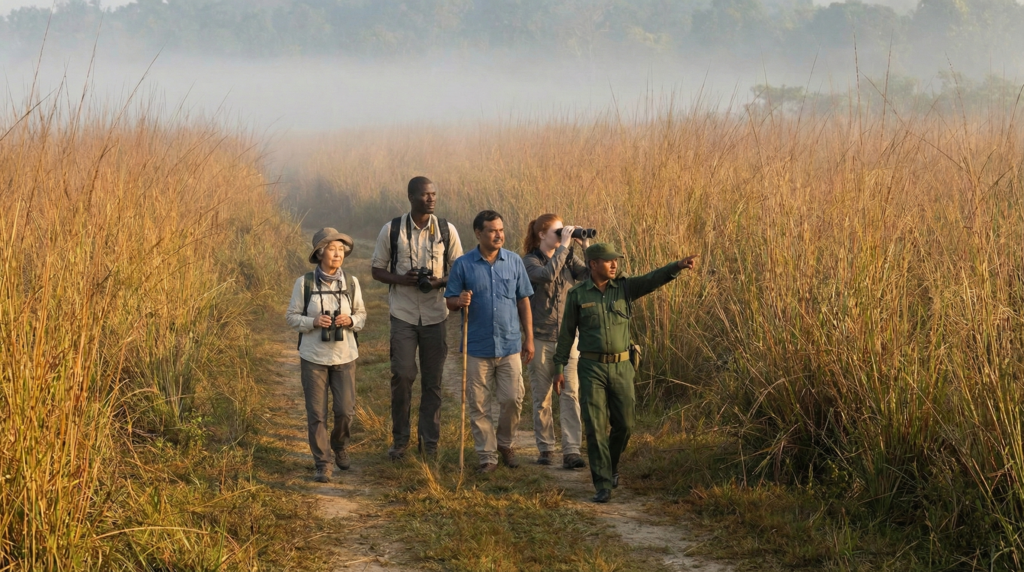
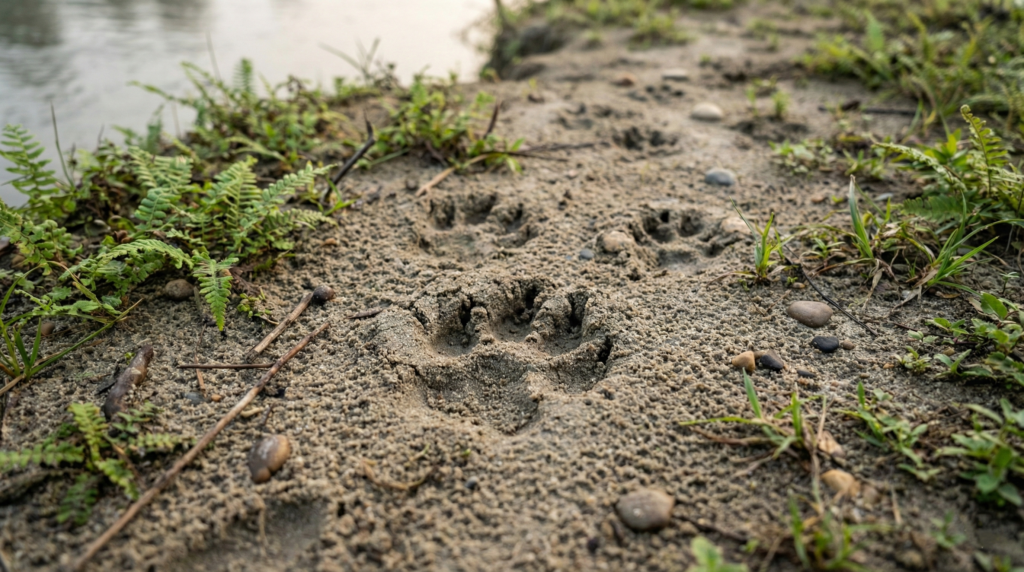
Walking safaris in the Terai slow everything down. You are no longer chasing sightings. Instead, you interpret signs such as pugmarks, dung, claw marks, and broken grass.
This pace builds awareness. It also reduces stress on animals, which often react less to calm human movement than to engines and noise.
On foot, the Terai feels alive in ways vehicles cannot offer. Bird calls shift through the canopy as you move. Damp earth rises near riverbanks, carrying the scent of recent rain. Insects, plants, and microhabitats come into focus, revealing layers of life that usually go unseen.
This sensory detail turns a walk into a lesson in ecology, not just wildlife watching.
Responsible walking safaris never aim to approach animals closely. Distance is respected at all times. Guides adjust routes based on wind direction, animal behavior, and recent sightings.
This ethical approach protects wildlife while keeping guests safe and informed.
The Terai is famous for species that thrive in grassland and forest edge habitats. These include the one-horned rhinoceros, Asian elephant, sambar deer, swamp deer, and wild boar.
Predators such as Bengal tigers and leopards are present but rarely seen on foot. Their signs are far more common than direct encounters, which is exactly how responsible walking safaris should be.
Walking safaris in the Terai offer exceptional birdwatching. You may spot hornbills, storks, kingfishers, raptors, and grassland specialists that avoid vehicle routes.
Smaller mammals, reptiles, and amphibians also become part of the experience. These species play vital roles in the ecosystem and are often overlooked on faster safaris.
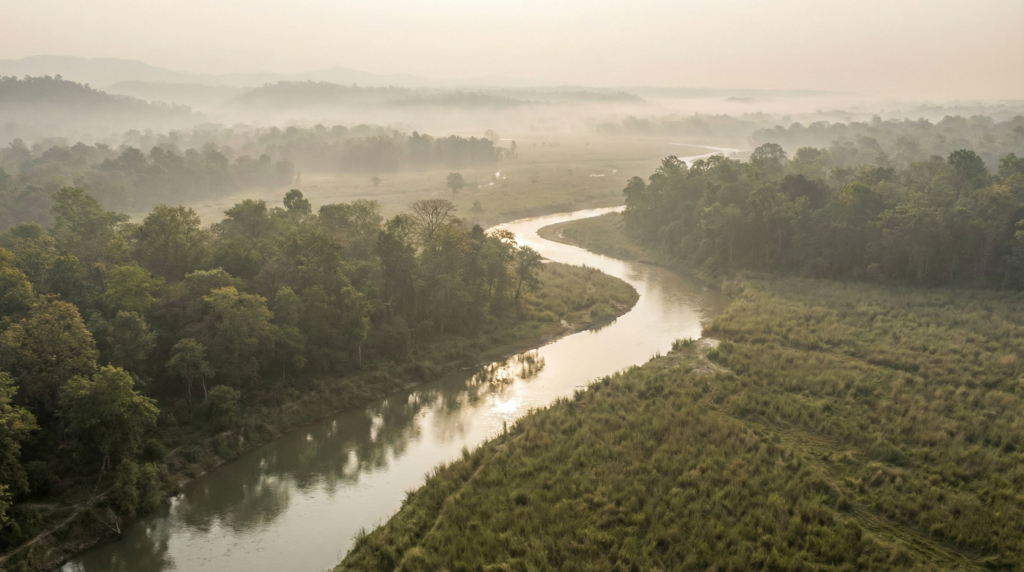
Nepal offers some of the most structured and well-regulated walking safaris in the region. Parks such as Chitwan and Bardia allow guided walks led by trained naturalists and local trackers.
These experiences often take place in buffer zones and designated forest areas, reducing pressure on core wildlife habitats. You can learn more about Nepal’s conservation approach through resources from the Department of National Parks and Wildlife Conservation.
On the Indian side, reserves like Dudhwa and Valmiki share similar landscapes and species. Walking experiences here are more limited but are expanding through community-led conservation initiatives.
The Wildlife Trust of India supports several Terai conservation programs that balance tourism and habitat protection.
While Bhutan is better known for high-altitude wildlife, its southern foothills form part of the Terai ecosystem. Walking experiences here focus heavily on interpretation, conservation values, and minimal disturbance.
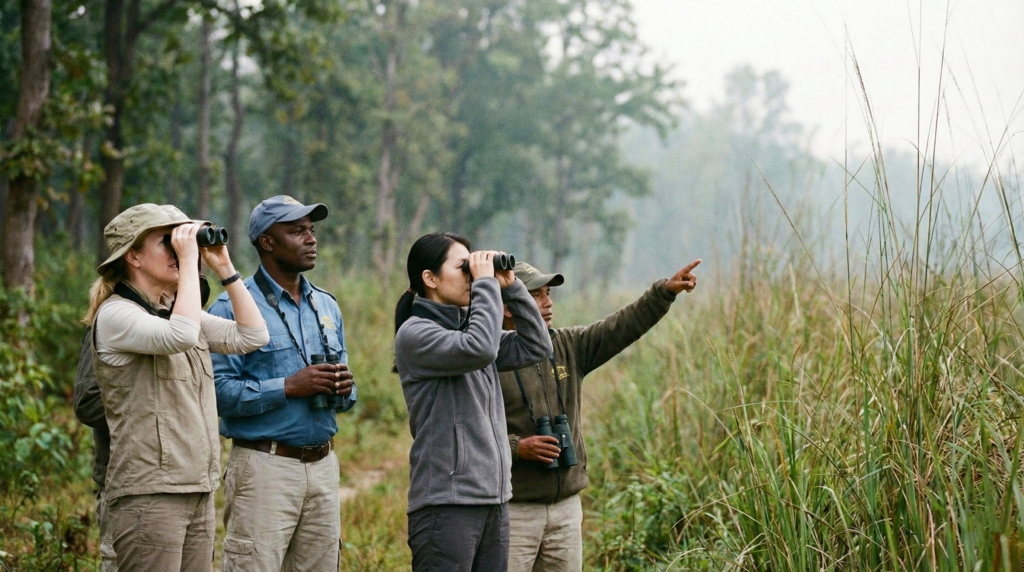
Walking safaris in the Terai should only be undertaken with experienced guides. These professionals read animal behavior, assess risk, and make real-time decisions.
Many guides come from local communities, bringing generational knowledge of the forest. Their role is central to both safety and education.
Strict protocols govern walking safaris. Group sizes remain small. Routes change daily. Radios and backup teams stay on standby.
Guests receive clear briefings before every walk. Following instructions is not optional. It is part of responsible wildlife travel.
Animals always have the right of way. Walks avoid nesting sites, watering times, and sensitive seasons such as breeding or calving periods.
This respect is what makes walking safaris sustainable over the long term.
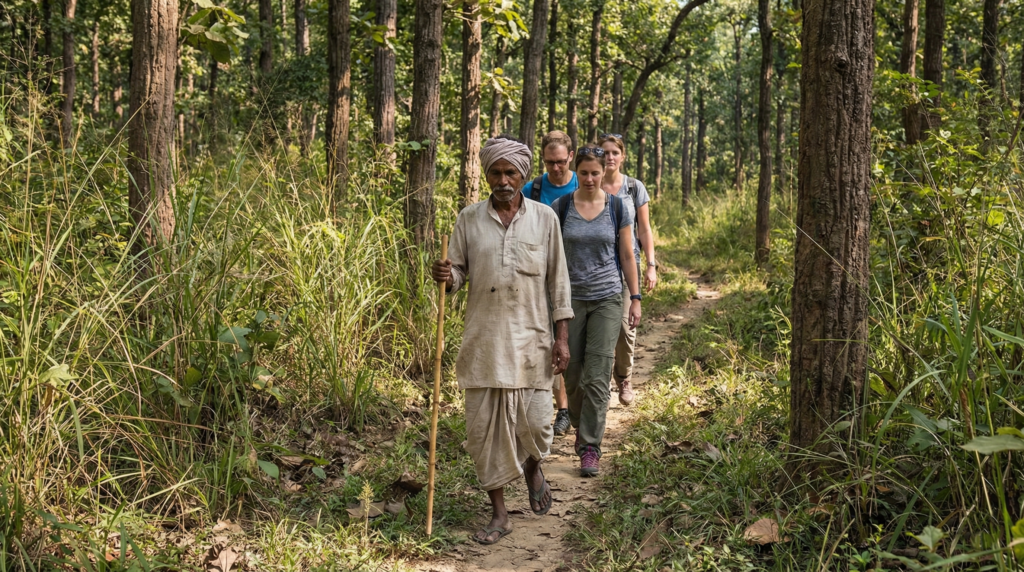
Walking safaris in the Terai often involve local guides, porters, and community lodges. This creates direct economic benefits for people living alongside wildlife.
When communities gain value from conservation, tolerance for wildlife increases. This reduces conflict and supports long-term protection efforts.
On foot, fuel use drops to zero. Trails leave minimal scars. Group sizes stay small.
This low-impact model aligns with global best practices promoted by organizations like the International Union for Conservation of Nature.
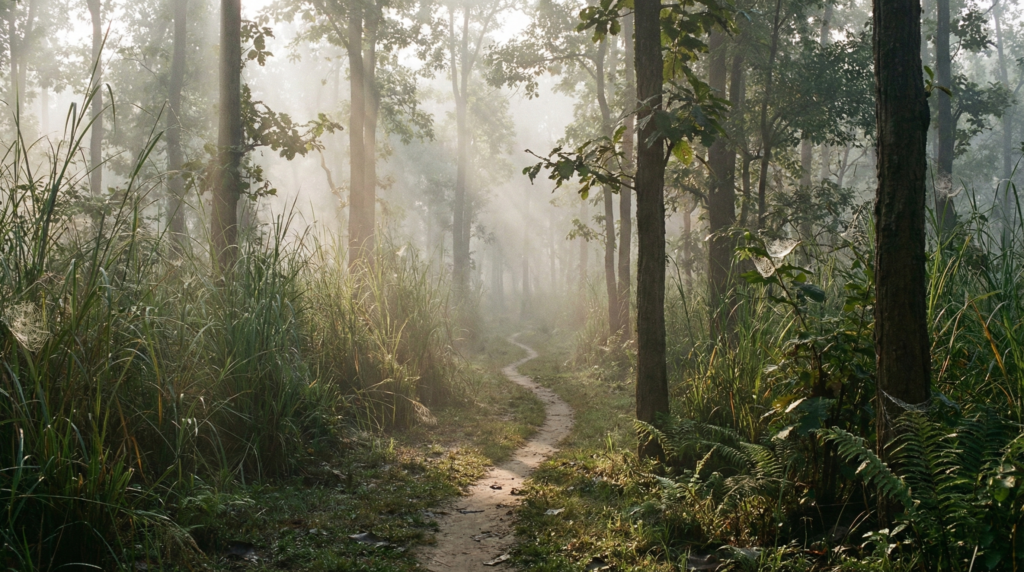
The best months for walking safaris in the Terai usually fall between October and March. Temperatures are moderate, visibility improves, and wildlife concentrates near water sources.
Monsoon months bring lush growth but limit walking due to tall grass, leeches, and reduced visibility.
Even in ideal seasons, conditions can change quickly. Morning fog, river crossings, and soft ground require flexibility and patience.
This unpredictability is part of the Terai’s character and charm.
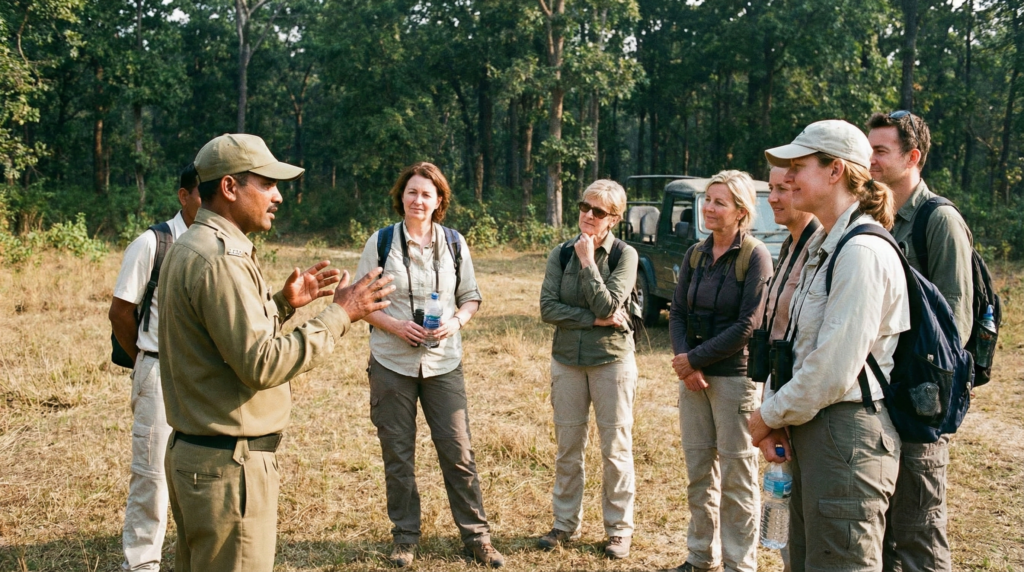
Walking safaris suit travelers who value learning over luxury. You should be comfortable walking for several hours and willing to follow strict guidelines.
Photographers, birders, and repeat safari-goers often find walking safaris especially rewarding.
These experiences may not suit travelers seeking guaranteed big animal sightings or high comfort levels. They also require a basic level of fitness and mental readiness.
AsianSafaris designs walking safaris in the Terai with safety, ethics, and depth at the core. Each itinerary balances guided walks with cultural insight and relaxed observation.
Our regional expertise across Nepal, India, Bhutan, and Sri Lanka allows us to recommend the right destination and season for your interests. Explore our broader wildlife journeys through AsianSafaris Wildlife Tours or discover how we approach conservation-focused travel on our About AsianSafaris page.
Walking safaris in the Terai strip wildlife travel back to its essentials. There are no engines, no guarantees, and no shortcuts. What you gain instead is understanding, respect, and a rare sense of connection.
For travelers who want to experience Asia’s wild lowlands responsibly, on foot, and with purpose, the Terai offers something increasingly rare. It offers truth.